Skip to content

Service 01

New metal roofs

A metal roof is a system, not a stack of sheets. The steel grade, the profile, the pitch it is laid at, what sits underneath it, and the way every edge and penetration is flashed all have to agree with each other. Get those right and the roof outlives the mortgage. Get one of them wrong and it will tell you about it, usually in the first serious downpour.

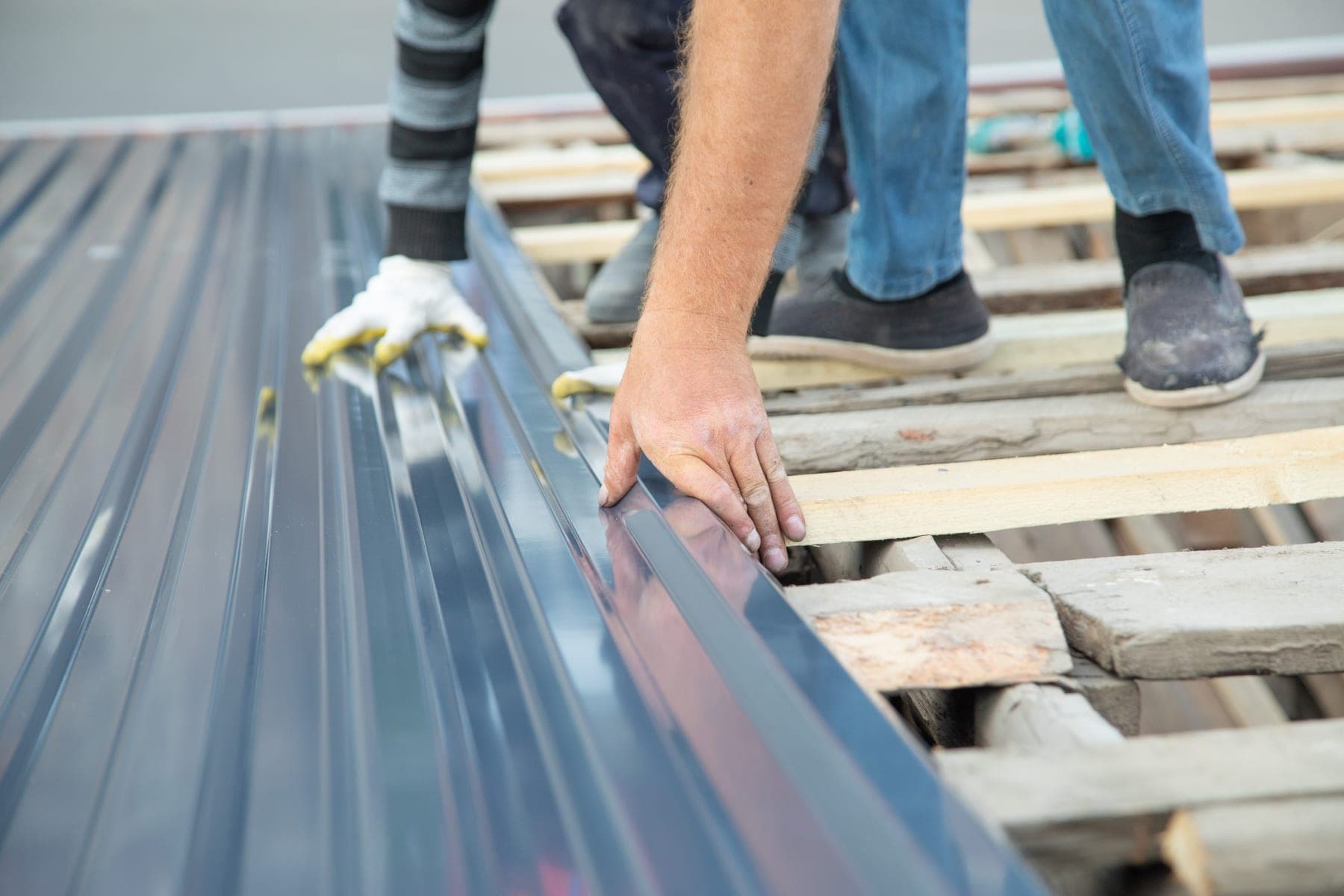
New metal sheeting being laid over timber battens

The profile is chosen by the pitch, not the catalogue

Every roof profile has a minimum pitch it can legally and practically be laid at, and that number decides the shortlist before anyone talks about looks. Corrugated needs around 5 degrees. Trimdek and similar ribbed profiles will go to about 3. Concealed-fix profiles like Klip-Lok run down to roughly 1 degree, which is why you see them on warehouses and flat-looking modern homes where nothing else will work.

Laying a profile below its minimum pitch is the single most common cause of a roof that leaks under wind-driven rain while appearing perfectly sound. Water does not simply run downhill on a shallow roof, it creeps sideways along the pans and backs up at every lap. If someone quotes corrugated on a 2 degree skillion, that is a reason to get another quote.

Beyond pitch, the choice is aesthetic and structural. Corrugated suits period and traditional homes and is the profile most people picture. Ribbed profiles suit contemporary builds and span further between battens. Concealed-fix has no visible screws at all, which gives the cleanest line and removes several hundred potential leak points, at a higher cost per square metre.

The steel under the colour matters more than the colour

Zincalume is the aluminium-zinc coated base steel. Colorbond is that same steel with a baked-on paint system over it. The paint is not decoration, it is the outer layer of corrosion protection, which is why a Colorbond roof holds up better than bare Zincalume in the same location.

Where the building sits changes which grade is appropriate. Standard Colorbond is fine for most of suburban Melbourne. Closer to breaking surf, or near heavy industry, the specification moves to Colorbond Ultra, which has a heavier metallic coating built for severe marine and industrial environments. Manufacturer warranties are written against distance from those conditions, so putting standard material in a severe environment does not just wear out faster, it voids the warranty that was supposed to cover it.

There are also performance variants worth knowing about. Colorbond with thermal technology reflects more solar radiation in darker colours, which measurably reduces heat load in summer. Matt finishes trade a little durability for a much softer look that architects favour. None of these are upsells if the building actually calls for them, and none of them are worth paying for if it does not.

What goes under the sheets is where roofs are won or lost

A metal roof is a cold surface. Warm, moist air from inside a house rises, hits it, and condenses. Managed badly, that condensation drips back into insulation, soaks it, and quietly destroys ceilings and framing over years while everyone blames a leak that does not exist. The National Construction Code has tightened considerably on this, and it is now one of the most common defects found in new builds.

The answer is a properly specified sarking or insulated blanket laid over the battens, with the vapour permeability and the thermal break the building actually needs, and ventilation paths that let the roof space breathe. Anticon blanket does thermal and acoustic work at the same time, which is why rain on a modern metal roof is a soft rush rather than the racket people remember from an old shed.

Batten type and spacing then follow the profile's span tables and the wind classification of the site. This is not a place for judgement calls. A profile rated to span 900mm on a sheltered suburban block may be rated to far less on an exposed hilltop, and battens set to the wrong centres are the reason roofs peel in storms.

Fixings, and the slow damage of getting them wrong

Fasteners are specified by corrosion class, and the class has to match both the environment and the sheeting. Class 3 covers most suburban work; coastal and industrial sites need Class 4. Mixing a cheaper fastener into a Colorbond Ultra roof puts a rusting steel point every few hundred millimetres through the most expensive part of the building.

Crest fixing versus valley fixing matters too. Screws through the crest of the rib keep the fastener out of the water path. Screws through the pan sit in the flow, and rely entirely on the sealing washer staying compressed and intact for decades. Torque is part of it as well: over-driven screws crush the washer and dimple the sheet, under-driven screws let it lift and breathe.

The other quiet killer is dissimilar metals. Copper or lead running off an upper roof or a flue onto Zincalume or Colorbond will corrode straight through it. So will unwashed contact with treated pine, or debris left sitting in a valley. A roof can be perfectly installed and still be destroyed by what someone attaches to it two years later.

Flashings are where roofs actually fail

Sheeting rarely leaks in the middle of a sheet. It leaks at the ridge, at the barge, in the valleys, where a wall meets a roof, and around every pipe, flue, vent, skylight and aerial that punches through it. Those are the details that take the time, and they are the first thing to look at on any quote that seems cheap.

Long runs bring in thermal expansion. Steel moves with temperature, and a long sheet fixed rigidly at both ends will either buckle or tear at the fixings. Expansion joints, correctly sized flashings with proper laps, and fixings that allow movement are all part of a roof that is still tight in twenty years.

The job

What the work involves

Every property is different, so the quote is written against your building rather than off a package. Typically it covers:

  • 01Site measure, roof plan set-out and wind classification check
  • 02Batten and structural verification before any sheeting goes on
  • 03Sarking, anticon blanket and thermal break to suit the building
  • 04Colorbond or Zincalume sheeting in the profile and grade specified
  • 05Ridge, barge, apron and valley flashings, and all penetration work
  • 06Corrosion-class matched fasteners throughout
  • 07Gutter, downpipe and stormwater connection
  • 08Expansion allowance on long runs
  • 09Full site clean, offcut and swarf removal

Reference

Corrugated, minimum pitch
approx. 5°
Trimdek / ribbed, minimum pitch
approx. 3°
Concealed-fix, minimum pitch
approx. 1°
Standard suburban fasteners
Class 3
Coastal / industrial fasteners
Class 4
Severe marine sheeting
Colorbond Ultra

On commercial buildings

On commercial and industrial buildings the profile is almost always concealed-fix over long spans, with insulation blanket, safety mesh and purlin-fixed systems. Roof access, fall protection and staging around the tenant's operating hours become as much a part of the job as the sheeting itself.

Commercial work

Common questions

Worth knowing before you book

How long does a new metal roof take?

Most standard homes are sheeted within a few days once the frame is ready. Complexity moves that more than size does: a simple gable goes quickly, while multiple hips, valleys, dormers and penetrations add days of flashing work. Weather and access do the rest. You should get a realistic timeline in the quote rather than a best case.

What is the difference between Colorbond and Zincalume?

Zincalume is the aluminium-zinc coated steel itself. Colorbond is that steel with a factory-baked paint system over the top, which is both why it comes in colours and why it lasts longer in the same conditions. Sheds and budget work still use bare Zincalume; most homes go Colorbond.

Is a metal roof noisy in the rain?

Not when it is built properly. The noise people remember comes from bare sheeting over an open shed. A roof with anticon blanket and insulation under it is noticeably quieter than a tiled roof in hail, and rain reads as a soft rush rather than a drumming.

Which colours actually hold up?

All current Colorbond colours carry the same paint system, so fade resistance is broadly comparable. The bigger practical difference is heat: dark colours absorb considerably more. If you want a dark roof on a west-facing house, the thermal-technology range and a properly specified blanket underneath are worth the money.

Do I need a permit for a new roof?

A new build or an extension is covered by the building permit for the works. Replacing an existing roof like for like usually is not, but changing the roof form, the pitch, or the structure can be. Heritage overlays add their own requirements. It is worth confirming before the sheets are ordered rather than after.

Next step

Get a quote for
new metal roofs

0427 809 652

We only use your details to reply about this job

Call nowFree quote