Skip to content

Commercial

Commercial & industrial roofing

On a commercial building the roof is rarely the hard part. Keeping the tenant trading, getting access without shutting the site down, and staging works so a live building stays watertight section by section is where the job is actually won or lost. The sheeting is the straightforward bit.

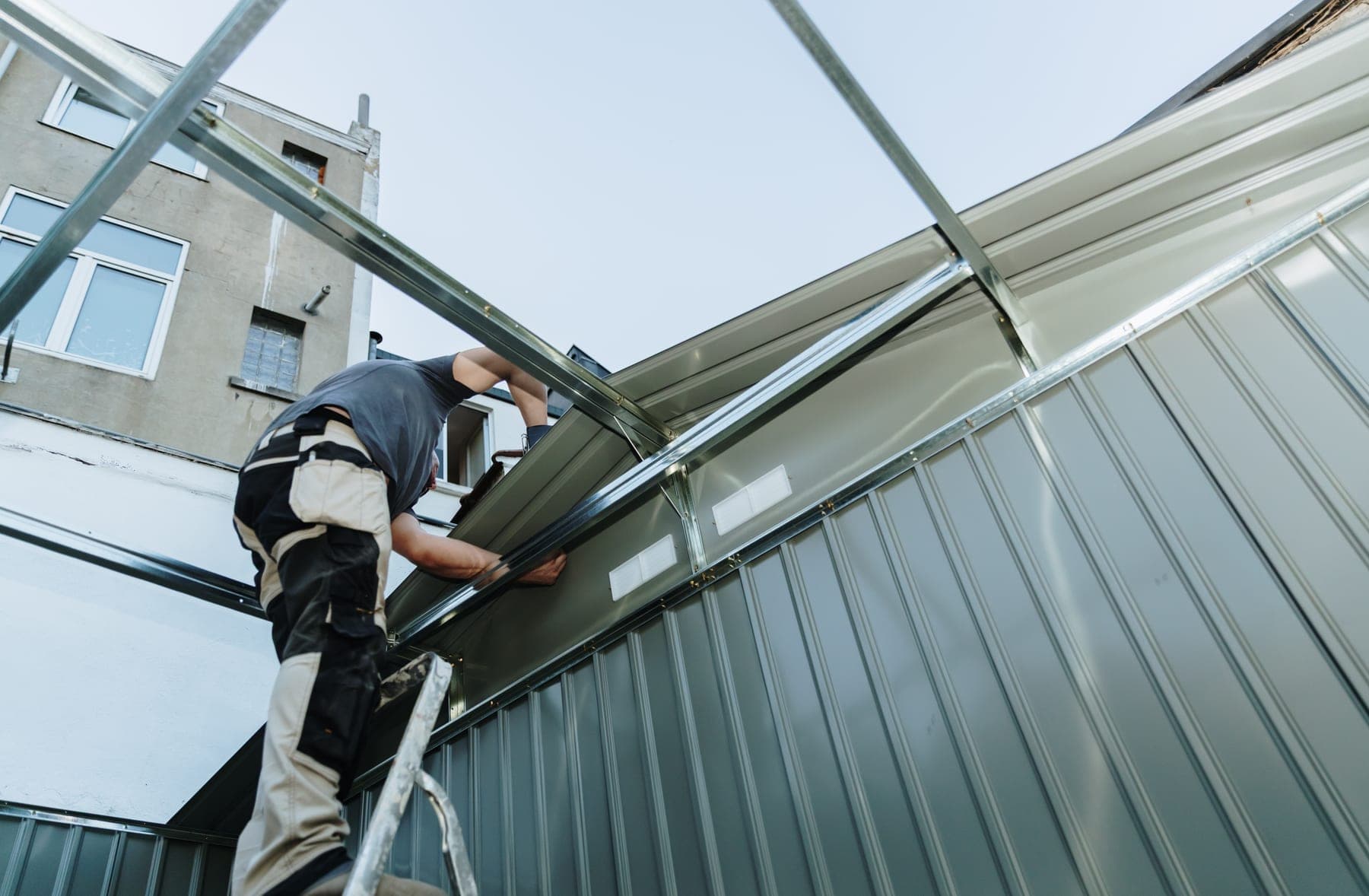
Worker installing sheeting on a large glazed structure

Buildings we work on

  • Warehouses and distribution facilities
  • Factories and light industrial
  • Retail and hospitality premises
  • Strata and owners corporation buildings
  • Schools, childcare and community facilities
  • Offices and mixed-use developments

What changes on this work

Access
out-of-hours and staged
Drainage
box gutters, sumps, rainheads
Sheeting
concealed-fix long span over purlins
Height safety
anchors, static lines, edge protection
Documentation
condition reports, defect register
Maintenance
scheduled programme, written record

The building does not stop for the roof

Commercial programmes are built around the occupier. Works get staged so that trading, production or stock movement continues, which frequently means night and weekend access, and always means the roof is made watertight at the end of each shift rather than at the end of the job.

That has cost implications and it is better to be honest about them upfront. Out-of-hours work costs more per hour and less in total than a shutdown does, and pretending otherwise is how programmes fall apart in week two.

Box gutters, and why they cause the expensive failures

Most commercial roofs drain through box gutters, sumps and rainheads rather than eaves gutters, and the difference matters enormously. A box gutter sits inside the building envelope. When it overflows, whether from a blockage, an undersized outlet, or a storm past what it was designed for, the water goes into the building rather than over the edge of it.

That is why these systems need sizing against catchment and a defined storm severity, a minimum fall along their length, correctly sized outlets, and a dedicated overflow that discharges visibly outside the building. It is also why they need scheduled clearing before winter. A blocked commercial box gutter is one of the most expensive water events a building can have, and it is nearly always a maintenance failure rather than bad luck.

Long-span sheeting, purlins and safety mesh

Commercial roofing is generally concealed-fix long-span profile over purlins, laid at very low pitch, with insulation blanket and roof safety mesh beneath. Concealed fixing removes thousands of penetrations from the roof, which matters more at scale than it does on a house, and it allows the thermal movement that long runs generate.

Existing safety mesh on an older building is a specific consideration during a re-sheet, because degraded mesh is a fall risk that looks like a safety system. Plant on the roof, air conditioning units, exhaust, solar arrays and cable trays all add penetrations and all have to be re-flashed, and they are usually the reason an old commercial roof leaks.

Compliance, access and documentation

Commercial sites come with site inductions, SWMS, insurance certificates and often a principal contractor to work under. Height safety is not a formality: anchor points, static lines and edge protection have to exist and be current, and on many sites a roof cannot be accessed until that is verified.

The other half is documentation. Written condition reports with photographs, a defect register, and scheduled maintenance records are what a facility manager needs for budgeting, what an owners corporation needs to justify a levy, and what an insurer will ask for when a claim is lodged. A roof with a maintenance history is a materially easier asset to insure and to sell than one without.

Maintenance as a programme, not a callout

The economics on a commercial roof favour prevention heavily, because the cost of failure is not the roof, it is the stock, the fit-out, the downtime and the tenant. A scheduled programme typically means inspection before winter, box gutter and sump clearing, fastener and seal checks, early rust treatment, and a written report each visit.

That turns roof spend into a predictable line item instead of an emergency, and it produces the paper trail that supports both budgeting and any future claim.

Services

What we take on for commercial clients

01

New metal roofs

On commercial and industrial buildings the profile is almost always concealed-fix over long spans, with insulation blanket, safety mesh and purlin-fixed systems. Roof access, fall protection and staging around the tenant's operating hours become as much a part of the job as the sheeting itself.

02

Full re-roofs

Commercial re-roofing is usually a live-building problem before it is a roofing problem. Works get staged around trading hours, night and weekend access is common, and the programme has to account for tenants, stock, plant on the roof, and keeping the building watertight section by section throughout.

03

Guttering, downpipes & stormwater

Commercial roofs run on box gutters, rainheads, sumps and syphonic or large-bore downpipes, and the consequences of undersizing are structural rather than cosmetic. These systems need designing against the catchment and a defined storm severity, and they need scheduled maintenance, because a blocked commercial box gutter puts water directly inside the building.

04

Roof repairs & maintenance

Commercial maintenance runs as a programme rather than a callout: scheduled inspections, box gutter and sump clearing before winter, fastener and seal checks, and a written condition report each visit. For owners corporations and facility managers that record is what supports budgeting and insurance, and it is what turns an unplanned failure into a planned line item.

05

General plumbing

Commercial plumbing brings its own requirements: backflow prevention devices with annual testing and reporting, grease arrestors for food premises, thermostatic mixing valves in healthcare and aged care, and maintenance that has to happen outside trading hours. The certification and testing records are part of the building's compliance obligations, not optional housekeeping.

Common questions

Can you work outside our trading hours?

Yes, and on most occupied commercial buildings that is the sensible way to run it. Out-of-hours work costs more per hour and far less in total than closing the site.

Our box gutter overflowed into the building. Why?

Almost always a blockage, an undersized or blocked outlet, or a missing or inadequate overflow. Because a box gutter sits inside the roof line, it has nowhere to spill except inwards. It needs clearing on a schedule and it needs a working external overflow.

Do you provide condition reports?

Yes. Written reports with photographs and a defect register, which is what facility managers and owners corporations need for budgeting and what insurers ask for when a claim is lodged.

Can you work under our principal contractor and site requirements?

Yes. Inductions, SWMS and insurance documentation are normal parts of commercial access, and height safety systems have to be current before anyone goes up.

Next step

Talk to us about
your building

0427 809 652

We only use your details to reply about this job

Call nowFree quote